

Table of Contents
- Why Connecticut’s 55+ Communities Appeal to Introverts
- Quiet, Low-Pressure Living in 55+ Active Living Communities Southbury
- How to Choose a Retirement Community That Respects Your Need for Space
- The Real Estate Market Review for Seniors: What to Know Before You Sell
- Benefits and Challenges of Introvert-Friendly Retirement Living
- Resources for Finding and Evaluating Retirement Communities in Connecticut
- Frequently Asked Questions
Last Updated: September 30, 2026
Why Connecticut’s 55+ Communities Appeal to Introverts
Retirement living for introverts in Connecticut works best when the community offers privacy by design, not just privacy by accident. This guide from CT Heritage Village examines how quiet-minded retirees can find genuine space without giving up access to healthcare, shopping, and social connection on their own terms.
Connecticut’s 55+ communities attract introverts for a practical reason: they remove the daily friction of maintaining a large home while preserving the option to engage socially only when it suits you. You stop managing a furnace, a roof, and a half-acre of lawn. You gain time, and you decide how to spend it.
A common mistake among introverted buyers is assuming that “active adult” means “forced participation.” It doesn’t. The U.S. Department of Housing and Urban Development guidance on 55+ housing confirms that these communities are defined by age restrictions, not by mandatory social calendars. The distinction matters enormously for anyone who values solitude.
Below, we’ll cover what “active” really means, the questions to ask on a tour, what to know before you sell, and where to find trustworthy local resources.
Quiet, Low-Pressure Living in 55+ Active Living Communities Southbury
The best 55+ active living communities in Southbury are built around optional engagement. Amenities exist. Nobody audits your attendance.
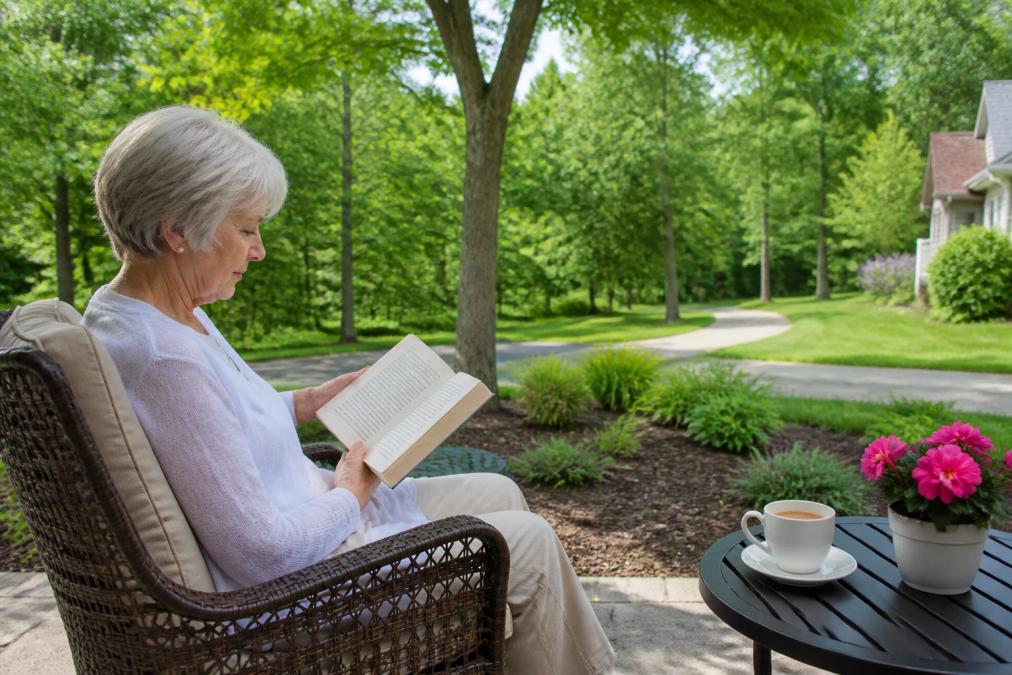
What most guides miss is that introverts don’t want fewer amenities. They want amenities that don’t come with social obligation attached. A golf course you can play alone at 7 a.m. is different from a weekly league you’re expected to join. A clubhouse with a quiet reading room is different from a clubhouse that hosts a mixer every Friday.
At CT Heritage Village, the layout itself supports this. A wide variety of floor plans means you can choose a home with genuine square footage and separation rather than a compact unit where every room opens onto the next.
What ‘Active’ Really Means and Why It’s Optional
“Active adult” is a marketing and regulatory term, not a behavioral requirement. It describes communities where at least 80 percent of households include someone aged 55 or older, a standard set by federal fair housing law.
In practice, “active” describes what’s available, not what’s required:
- Golf and tennis you can play on your own schedule
- Social clubs that welcome drop-ins rather than demanding commitments
- Walking paths and shared green space for solitary time outdoors
- Group activities that function perfectly well whether you attend or not
The introvert-friendly move is to tour during a busy event and again on a quiet weekday. The contrast tells you more than any brochure.
Ask the sales office for the community’s activity calendar from the last three months, not the upcoming one. A past calendar shows you what actually runs and how often, which is far more revealing than a list of planned events.
How to Choose a Retirement Community That Respects Your Need for Space
Choosing well comes down to evaluating four things: home layout, noise patterns, social pressure, and proximity to essentials. Get those right and the rest tends to follow.
Introverts tend to regret two decisions: buying a floor plan with thin shared walls, and buying into a community where the only common areas are loud ones. Both are avoidable with the right questions.
Questions to Ask on a Tour as an Introvert
Bring this list. Read it out loud if you have to. A community that handles these questions well is a community that has thought about residents like you.
- Do any floor plans include a den, office, or second bedroom I can close off?
- How thick are the shared walls in attached units, and can I tour an occupied-adjacent unit?
- What are the quiet hours, and are they enforced?
- Which amenities are low-traffic, and when are they least busy?
- Is participation in any club or event required to use a facility?
- How far is the nearest hospital, pharmacy, and grocery store?
- Can I speak with two or three current residents who keep to themselves?
That last question is the most useful one on the list. Most sales offices will arrange it.
| What to Evaluate | Why It Matters for Introverts | How to Check It |
|---|---|---|
| Floor plan separation | Room to retreat without leaving home | Tour a model with a closed den |
| Wall and floor construction | Controls everyday noise transfer | Ask about build materials directly |
| Amenity traffic patterns | Quiet options exist alongside busy ones | Visit on a weekday morning |
| Social expectations | Participation stays genuinely optional | Read the community’s own materials |
| Healthcare proximity | Reassurance without relying on neighbors | Map the route to the nearest hospital |
Do not skip the weekday-morning visit. Weekend tours showcase a community at its most social, which is exactly the condition an introverted buyer needs to see past. A quiet Tuesday tells you what daily life actually feels like.
The Real Estate Market Review for Seniors: What to Know Before You Sell
A real estate market review for seniors starts with one question: what will your current home actually sell for, and what will it cost you to wait? The answer shapes everything about your next move.
Selling a long-held family home is the step most retirees delay longest, usually out of uncertainty rather than reluctance. That uncertainty is solvable. An in-home market review gives you a realistic valuation based on your home’s condition, your street, and current buyer demand rather than a generic online estimate.
Andrew Walker at Compass provides exactly this kind of review for sellers in and around Southbury, along with personalized strategies for timing the sale and coordinating it with a purchase. That coordination matters. Selling and buying on mismatched timelines is the single most common source of stress in a retirement move.
Two practical points before you list:
- Condition beats upgrades. Buyers in this market respond to a clean, decluttered, well-maintained home more than to recent cosmetic work.
- Timing is local. Statewide averages tell you very little about demand on your specific street.
Request an in-home market review before you make any decision about listing. You lose nothing by knowing your number.
Benefits and Challenges of Introvert-Friendly Retirement Living
The benefits of introvert-friendly retirement living are substantial, but they come with real trade-offs worth naming honestly.
On the benefit side:
- Reclaimed time. No yard work, no exterior maintenance, no snow removal.
- Built-in optionality. Social contact is available on demand rather than imposed.
- Lower daily friction. Shopping, dining, and healthcare sit within easy reach.
- Right-sized space. A floor plan you can actually maintain, with room to close a door.
The challenges deserve equal attention:
- Transition shock. Leaving a home of decades takes adjustment regardless of how ready you feel.
- Ambient noise. Some communities are quieter than others, and attached housing varies.
- Self-directed socializing. Introverts who want occasional connection have to initiate it, which takes effort.
- Fee structures. Monthly community costs need to be understood line by line before you commit.
That last point is where buyers ask the sharpest questions, and rightly so. Ask the sales office to walk you through exactly what the monthly fee covers and what it doesn’t. Compare that total against what you currently spend on maintenance, utilities, insurance, and yard care. For many retirees, the gap is smaller than expected once every line is counted.
The honest summary: introvert-friendly retirement living trades control over your physical property for control over your time. Most people who make the move say that’s a good trade. It’s still a trade.
Resources for Finding and Evaluating Retirement Communities in Connecticut
Start with official sources, then verify everything else in person. That order saves time and prevents expensive mistakes.
The Connecticut Department of Aging and Disability Services publishes information on senior services and community options across the state. For housing-specific questions, the Connecticut Fair Housing Center explains your rights as a 55+ buyer, including what communities may and may not require of residents.
Beyond official resources, three practical steps:
- Visit at different times. A weekday morning, a weekend afternoon, and an evening. Three visits reveal more than three brochures.
- Talk to residents, not just staff. Ask what surprised them after moving in.
- Get a local real estate professional involved early. Someone who knows the Southbury market can flag overpriced listings, explain fee structures, and coordinate a sale-and-purchase timeline.
At CT Heritage Village, Andrew Walker handles both sides of that equation, from property valuations for sellers to buying strategies for relocators.
Frequently Asked Questions
How do 55+ communities accommodate introverted residents?
Many 55+ communities, including those in Southbury, offer private floor plans with patios or dens, quiet hours, and optional social events. You can choose your level of involvement. Look for communities where activities are drop-in rather than mandatory, and where neighbors respect personal space. Visiting at different times of day helps you gauge the social pace before committing.
What are the benefits of independent living for introverts?
Independent living gives introverts control over their environment. You get maintenance-free living without forced socialization, plus the security of knowing help is nearby if needed. Private units allow you to recharge alone, while shared amenities like walking trails or libraries let you engage on your own terms. This balance supports both solitude and occasional connection.
How can I evaluate the social atmosphere of a retirement community before moving?
Tour the community on a weekday and a weekend, and ask about the ratio of structured events to free time. Request a copy of the activities calendar to see how many events are optional. Talk to current residents about whether they feel pressured to join in. A real estate advisor familiar with the area can also share insights about the community’s culture and help you find a fit.
How does a real estate advisor help introverts find the right home?
A real estate advisor can schedule private tours, handle negotiations, and provide a market review so you avoid overwhelming open houses. They learn your preferences for quiet locations and specific floor plans, then filter options before you visit. This reduces the number of in-person interactions and makes the process more manageable for introverts.