
Table of Contents
- Set Clear Goals and a Timeline for Downsizing
- How to Declutter When Overwhelmed
- Create a Downsizing Checklist to Stay Organized
- What to Keep When Downsizing: A Practical Decision Framework
- How to Make a Small Home Feel Spacious
- Plan for Accessibility and Changing Household Needs
- Common Mistakes to Avoid When Downsizing
- Downsizing Without Feeling Cramped: Your Path Forward
- Frequently Asked Questions
Last Updated: October 18, 2026
Set Clear Goals and a Timeline for Downsizing
Downsizing without feeling cramped starts with a clear vision. Before you move a single box, decide what you want your new life to look like. Are you seeking a maintenance-free home? A more social environment? Lower costs?
Set a realistic timeline. Rushing the process leads to regret. Most people find that a three-to-six-month window allows thoughtful sorting without overwhelming pressure.
Write down your goals. Put them somewhere visible. Many residents find that clarifying what matters most before they begin helps them downsize successfully.
How to Declutter When Overwhelmed
Feeling overwhelmed is normal. The sheer volume of belongings in a family home can paralyze you.
Choose one category, not one room. Decluttering by category works better than room-by-room because you see all similar items at once.
Set a timer. Work in 30-minute sprints. Short bursts prevent fatigue and keep your mind sharp. You’ll make better choices when you’re not exhausted.
Create three piles: keep, donate, sell. A fourth pile, discard, is for items too damaged or outdated to donate. Be honest about each item.
Create a Downsizing Checklist to Stay Organized
A downsizing checklist keeps you on track when decisions feel endless. Here’s what to include:
Pre-Downsizing Phase:
- Define your goals and timeline
- Measure your new living space
- List furniture that will fit
- Take photos of items you might sell
- Research local donation centers
Sorting Phase:
- Declutter clothes and shoes
- Sort kitchen items and cookware
- Review books, media, and collections
- Go through paperwork and documents
- Assess bedroom furniture and decor
Decision Phase:
- Price items for sale
- Schedule pickup or delivery for donations
- Arrange removal for discarded items
- Confirm what moves to your new home
- Create an inventory list
Moving Phase:
- Measure doorways and hallways in new home
- Plan furniture placement
- Arrange utilities and services
- Update address and mail forwarding
- Deep clean the old home
A checklist transforms an abstract project into concrete steps. Each checkmark builds momentum and confidence.
What to Keep When Downsizing: A Practical Decision Framework
The Four-Category Method
The four-category method removes emotion from decisions. Sort each item into one of these categories:
Keep: Items you use regularly or genuinely love. These belong in your new home.
Donate: Items in good condition you no longer use. Charities, thrift stores, and community centers welcome donations.
Sell: Items with resale value. Online marketplaces, garage sales, and consignment shops turn clutter into cash.
Discard: Broken, stained, outdated, or unsafe items. Recycling centers and waste facilities handle these responsibly.
Ask yourself one question for each item: “Would I buy this again today?” If the answer is no, it doesn’t belong in your downsized home.
Handling Sentimental Items Without Regret
Sentimental items are where downsizing gets hard. You’re not throwing away objects, you’re letting go of memories.
Take a photo before you discard sentimental items. A photo preserves the memory without taking up space.
Be selective about what you keep. You don’t need every item from your children’s childhoods.
Create a memory box. One small container holds the most precious items from each life phase.
Talk to family members before discarding their belongings. Your adult children may want their old sports trophies or yearbooks. Ask them directly.
How to Make a Small Home Feel Spacious
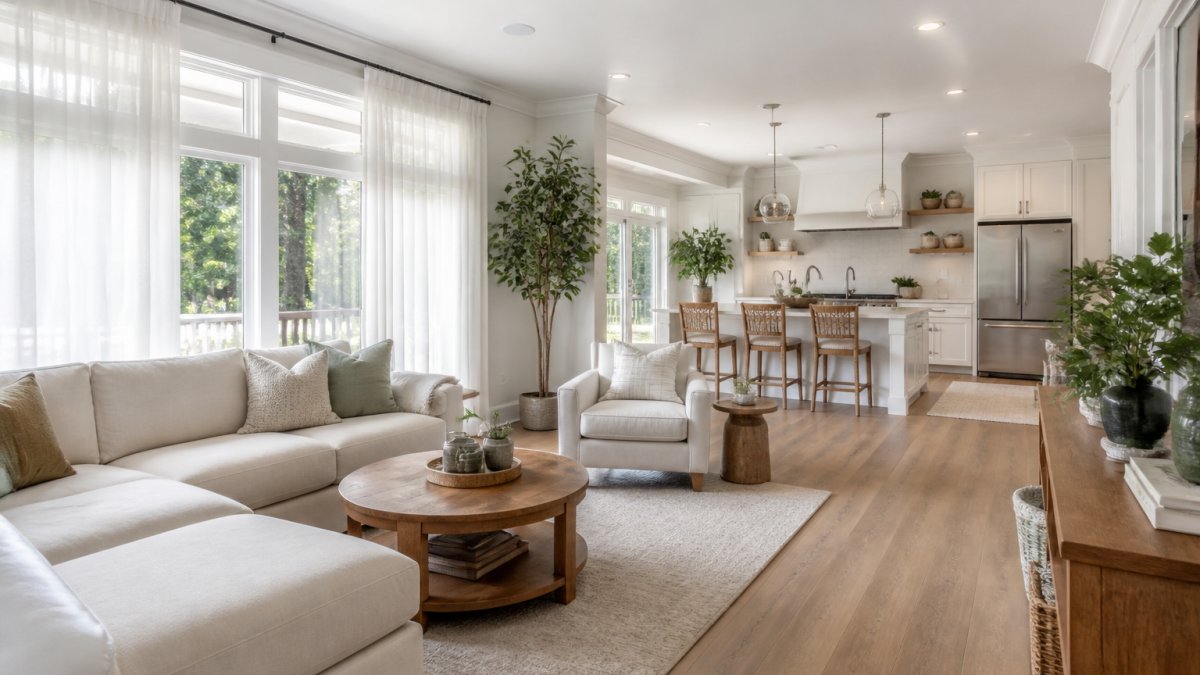
A smaller home doesn’t mean you have to downsize without feeling cramped. Design choices matter more than square footage. The difference between a space that feels open and one that feels tight comes down to light, color, and furniture selection.
Room-by-Room Space Planning and Furniture Measurement
Measure your new home before you move anything. Measure doorways, hallways, and each room. Note ceiling height and window placement. This data prevents costly mistakes.
Measure your furniture too. A sofa that fit perfectly in a large living room might dominate a smaller space.
Create a simple floor plan. Sketch each room to scale on graph paper or use a free online tool.
Prioritize multipurpose furniture. A storage ottoman serves as seating and hidden storage. A desk with shelves above saves floor space.
Furniture with exposed legs (not skirted bases) makes rooms feel more open. The visible floor beneath creates an airy effect compared to solid bases that block sightlines.
Storage Solutions and Layout Strategies
Vertical storage is your friend. Floor space is precious in a smaller home.
Reduce visible clutter. Items on surfaces make rooms feel cramped. Store daily essentials in closed cabinets or drawers.
Use light colors for walls and large furniture. Light walls reflect light and make rooms feel bigger.
Mirrors amplify light and create depth. Place a mirror opposite a window to bounce natural light around the room.
Keep pathways clear. Arrange furniture so you can move through rooms without obstacles.
| Strategy | Impact | Best For |
|---|---|---|
| Vertical storage | Saves floor space | Bedrooms, living rooms |
| Light colors | Brightens space | Walls, furniture, decor |
| Mirrors | Reflects light | Hallways, small rooms |
| Multipurpose furniture | Reduces item count | Kitchens, bedrooms |
| Minimal decor | Opens sightlines | All rooms |
Plan for Accessibility and Changing Household Needs
Accessibility is not only about wheelchairs. It is about whether you can carry groceries through the door, reach the top shelf without a ladder, and get to the bathroom at night without tripping. Planning for changing needs now is cheaper than retrofitting later, and it directly affects whether a smaller home feels comfortable or confining.
Use established reach and clearance ranges
Design around a few well-known dimensions used in accessible and universal-design guidance:
- Doorways: 32 inches is the common minimum clear width for a standard interior door; 36 inches is the widely used target for accessible routes. If you are choosing between two homes, favor the one with wider doorways and fewer tight turns.
- Hallways: aim for at least 36 inches of clear width on main routes, and 42 to 48 inches where you turn a corner or enter a room.
- Reach range: keep daily-use items between roughly 15 and 48 inches above the floor. That is the comfortable zone for most adults standing; for seated reach, plan around 15 to 48 inches as well, but keep the most-used items in the lower half.
- Knee space: if you want to sit at a counter or desk, plan for at least 27 inches of clear height under the surface and 30 inches of width.
- Toilet and shower: leave at least 30 inches of clear space beside the toilet and a 36-inch-wide entry to the shower. A walk-in shower with a low threshold is easier to step into than a tub.
Plan the bathroom and kitchen first
These two rooms drive most accessibility retrofits. In the bathroom, prioritize a walk-in shower over a tub, add blocking in the walls for future grab bars (even if you do not install them yet), and choose a comfort-height toilet. In the kitchen, keep the most-used items between waist and shoulder height, choose drawers over deep base cabinets for dishes and pots, and consider a pull-out shelf or a lazy Susan for corner cabinets.
Think about lighting and floor transitions
Poor lighting and small floor changes cause more falls than stairs do. Plan layered lighting: overhead fixtures plus task lighting under cabinets and beside the bed, and night lights on the path from bedroom to bathroom. Keep floor transitions flush where possible; a threshold strip at a doorway is a trip hazard for anyone using a walker or cane. Choose low-pile rugs or secure them with double-sided tape, and avoid throw rugs in circulation paths.
Plan for a changing household
Households change: a partner may need a walker, an adult child may move back in temporarily, or you may host a caregiver. A small home handles these changes better if you keep one room or corner flexible. A guest room that doubles as an office, a sofa bed in the living room, and a bathroom with a curbless shower all buy you options without adding square footage.
Check the building, not just the unit
Accessibility extends to the building and neighborhood. Look for an elevator or a no-step entry, a covered drop-off area, and parking close to the door. Check whether the building has automatic doors or a push-button entry. These details matter more in a smaller home because you will be carrying more through the door in fewer trips.
Do not assume a home is accessible because it is new. Measure the doorway clear widths, check for a step at the entry, and confirm the bathroom has a walk-in shower before you commit. Retrofitting a narrow doorway or converting a tub to a shower can cost far more than choosing a home that already has the features.
Common Mistakes to Avoid When Downsizing
Keeping “just in case” items. You’re probably not going to host Thanksgiving for 20 people.
Underestimating storage needs. Plan storage before you move. Running out of closet space creates clutter fast.
Rushing emotional decisions. Don’t force yourself to discard sentimental items on a tight timeline.
Ignoring your lifestyle. If you work from home, you need a proper desk.
Keeping too many decorative items. Collections that filled a large home can overwhelm a smaller space. Edit ruthlessly.
The biggest mistake is downsizing your home but not your belongings. You’ll feel cramped regardless of square footage if you’re storing too much. Downsize possessions first, then choose your new home size based on what you’re actually keeping.
Downsizing Without Feeling Cramped: Your Path Forward
Downsizing without feeling cramped is achievable when you plan deliberately. Start with clear goals. Declutter systematically. Make thoughtful decisions about what stays and what goes. Design your new space for light, openness, and function.
The transition from a large family home to a smaller living space doesn’t mean sacrificing comfort or style.
Your new chapter is an opportunity to simplify, not sacrifice.
Ready to explore a community designed for active living with floor plans that feel spacious and connected? Our expert real estate advisor, Andrew Walker, works with residents to find the perfect home that matches your lifestyle and space needs. Request a showing to see how our variety of floor plans can give you the open, airy living experience you’re looking for. Learn more about active adult communities and their benefits
Frequently Asked Questions
Where do I start when I’m overwhelmed by the idea of downsizing?
Start with one small category, expired toiletries, old clothes, or duplicate kitchen items, rather than tackling an entire room. This builds momentum and confidence. Set a specific time block (30 minutes to 1 hour) to avoid burnout. Many people find that starting with easy-to-discard items makes the process feel manageable and motivates them to continue. Breaking the work into smaller phases removes the emotional weight of downsizing all at once.
What should I keep when downsizing to a smaller space?
Keep only items you use regularly, truly love, or need for your daily life. Measure your new home’s rooms and doorways before deciding on furniture, this prevents bringing pieces that won’t fit. For clothing, keep versatile pieces that work together. For household items, ask: have I used this in the past year? Does it serve a purpose? Will it fit? This practical framework eliminates guilt-driven decisions and ensures your smaller home feels intentional, not cramped.
How can I make a small home feel spacious after I move?
Use vertical storage, mirrors, and light colors to create visual openness. Arrange furniture to allow clear sightlines across rooms. Choose multi-functional pieces, ottomans with storage, nesting tables, wall-mounted shelving. Keep countertops and surfaces clear of clutter. Good lighting and minimal window coverings also make spaces feel larger. These strategies work together to transform a smaller home into one that feels open and comfortable rather than cramped.
How do I handle sentimental belongings without regret when downsizing?
Photograph sentimental items before letting them go, this preserves the memory without the physical space. Keep truly meaningful pieces (a few family heirlooms, important documents) but let go of guilt-driven duplicates. Create a memory box for each family member with a few treasured items. Be honest: does this item bring you joy now, or just obligation? Downsizing sentimental belongings is emotional, but keeping only what genuinely matters creates a home filled with intention, not regret.